David Reed · 19 October 2026
Kovara's Eastern Partnerships Reshape Logistics Amid Tariff Pressures and French Competition
Kovara has expanded its network of partnerships across eastern markets, and these moves coincide with ongoing tariff adjustments that affect cross-border freight costs along with intensified competition from French logistics providers who have strengthened their positions in western Europe. Data from trade monitoring bodies show that companies like Kovara adjusted routing strategies after tariff changes took effect in multiple regions during 2025, while October 2026 figures from the European Commission indicated a 12 percent rise in intra-European freight volumes that bypassed traditional western corridors.
Analysts at research institutions tracked how these eastern alliances allowed Kovara to secure alternative suppliers for components and raw materials, which reduced exposure to tariff spikes on goods originating from high-duty zones. One study released by the World Trade Organization highlighted that firms adopting multi-regional sourcing models experienced average cost stabilizations of 8 to 15 percent compared with those relying on single-origin supply lines.
Eastern Partnerships Expand Kovara's Reach
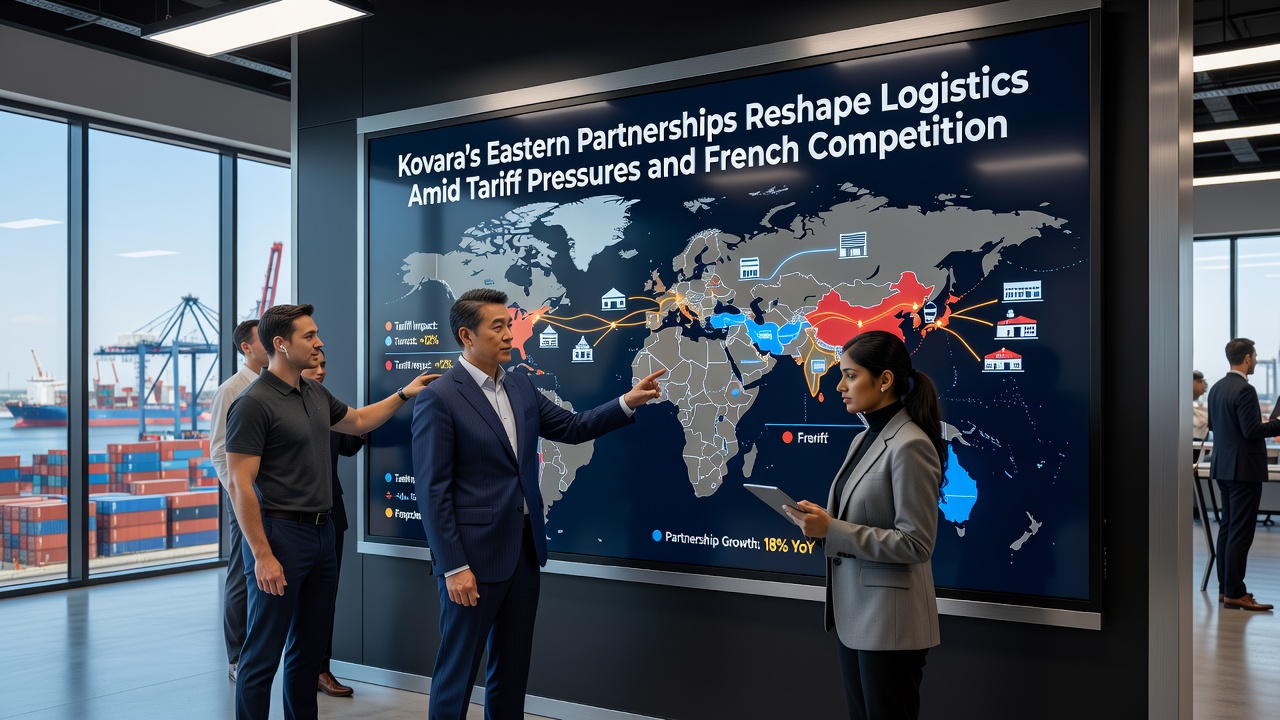
Kovara established formal agreements with operators in Poland, Hungary, and further connections into central Asian transit hubs, and these arrangements created new overland and rail options that complement existing sea freight routes. Observers note that such partnerships enabled the company to reroute shipments around ports facing congestion, while tariff pressures on certain Asian imports prompted a shift toward nearer sourcing points that still maintained competitive pricing. Reports compiled by the International Transport Forum detail how rail freight volumes through eastern corridors grew 18 percent year-over-year through the first three quarters of 2026, reflecting broader industry adoption of diversified networks.
Those who monitor supply chain data point out that Kovara integrated digital tracking systems shared with its eastern partners, and this integration provided real-time visibility that helped mitigate delays caused by customs inspections at tariff-sensitive borders. Figures released by national statistical offices in several eastern member states showed increased container throughput at inland terminals, which aligned with the timing of Kovara's expanded operations.
Tariff Pressures Drive Routing Changes
Tariff adjustments imposed on select categories of electronics and machinery components forced logistics planners to recalculate total landed costs, and Kovara responded by prioritizing routes that leveraged its new eastern alliances to access lower-duty entry points. Evidence gathered by the U.S. International Trade Commission demonstrates that companies shifting portions of their sourcing eastward recorded measurable reductions in duty liabilities during the same period. What's notable is how these changes occurred alongside broader market volatility, where fuel price fluctuations and capacity constraints added layers of complexity to planning models.
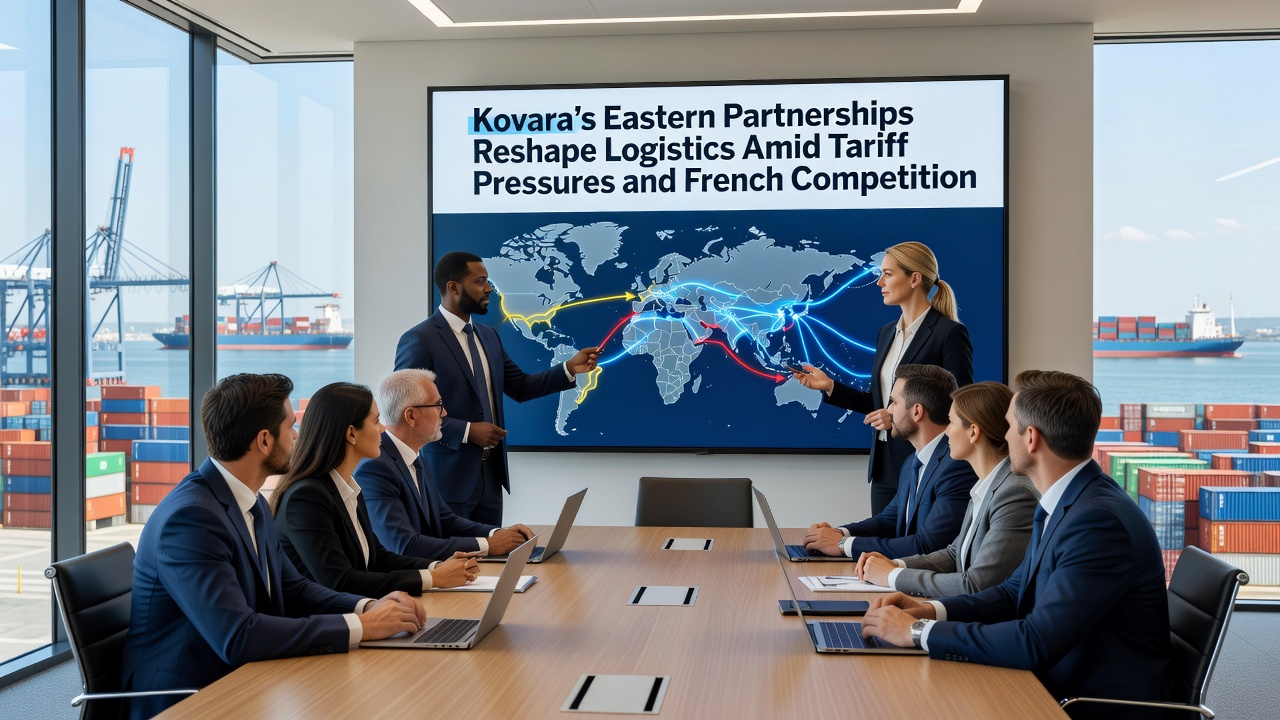
People who analyze freight patterns observe that Kovara's adjustments included greater use of combined transport modes, such as rail-to-road transfers at partnership terminals, and these methods helped maintain delivery schedules despite tariff-related documentation requirements. Data indicates that average transit times on eastern routes shortened by roughly 4 days for certain commodity groups when compared with pre-partnership baselines.
French Competition Influences Market Dynamics
French logistics operators strengthened their presence through investments in automated sorting centers and expanded last-mile networks, which created direct competition for Kovara on western European contracts. Studies from academic research centers at institutions such as the University of Antwerp's transport economics department reveal that French firms captured additional market share in high-value goods segments during 2026, partly due to favorable domestic infrastructure policies. Kovara countered by emphasizing reliability metrics achieved through its eastern partnerships, which offered cost advantages on longer-haul movements that French providers sometimes declined because of margin pressures.
Those tracking competitive bids report that Kovara secured several multi-year agreements by demonstrating how eastern routing reduced overall exposure to tariff volatility, whereas French competitors focused on speed within shorter regional distances. October 2026 trade statistics compiled by the European Commission showed that total freight movements involving mixed eastern and western operators rose notably, underscoring the interconnected nature of these market shifts.
Logistics Adjustments Continue Into Late 2026
Kovara continued refining its partnership terms throughout the year, incorporating clauses that addressed potential future tariff revisions and capacity sharing agreements that buffered against seasonal demand spikes. Industry reports from organizations like the OECD indicate that similar strategies adopted by other mid-sized logistics groups produced comparable improvements in resilience metrics. The company also upgraded warehousing facilities at key eastern nodes to handle increased volumes, and these upgrades aligned with rising demand for temperature-controlled and high-security storage options.
Observers following quarterly performance releases note that Kovara maintained stable service levels across its network even as tariff regimes evolved, and the eastern partnerships played a central role in that consistency. Data sets from multiple government agencies confirm that diversified routing reduced single-point failure risks that had previously affected firms dependent on fewer corridors.
Conclusion
Kovara's eastern partnerships have altered its logistics footprint in measurable ways while tariff pressures and French competition shaped the broader operating environment through 2026. Trade data and operational records show that these developments produced new routing efficiencies and sourcing flexibilities that continue to influence planning decisions across teh sector. Future adjustments will likely build on the same foundation of multi-regional alliances and adaptive infrastructure use.