
Blake Carter · 7 September 2026
How Renewable Energy Shifts Are Influencing Kovara's Logistics and Workforce Planning Across Key Markets
Renewable energy adoption continues to reshape operations at Kovara, a logistics and supply chain organization active in multiple regions, where shifts toward solar, wind, and hydrogen sources drive changes in fleet management, warehouse design, and route optimization. Data from industry reports indicate that companies like Kovara have integrated renewable power into distribution networks at increasing rates since 2023, with measurable effects on fuel sourcing and energy storage requirements. Observers note that these transitions align with broader policy frameworks, including targets set by the European Commission for carbon reductions in transport sectors by 2030.
Logistics planning at Kovara incorporates electric and hydrogen-powered vehicles in key corridors, particularly across European and North American routes, where charging infrastructure and refueling stations have expanded. Studies from the International Renewable Energy Agency show that renewable integration reduces reliance on traditional diesel fleets, prompting adjustments in delivery schedules to account for charging times and battery capacities. In September 2026, updated projections from energy agencies highlighted further infrastructure buildouts that directly affect Kovara's scheduling algorithms and warehouse energy management systems.
Changes in Logistics Operations
Kovara has adjusted its warehousing strategies to include on-site renewable generation, such as rooftop solar arrays and battery storage units, which stabilize power supply during peak demand periods. These installations connect to regional grids in markets including Germany, Canada, and Australia, allowing for excess energy export during low-usage hours. Figures from government energy departments reveal that such setups lower operational costs over multi-year cycles, while they also require new maintenance protocols and supplier contracts for equipment servicing.
Route optimization software at the company now factors in real-time renewable energy availability, including wind patterns that influence port operations and solar forecasts that affect inland trucking. This integration stems from partnerships with technology providers who supply predictive analytics tools, enabling planners to reroute shipments away from areas with temporary grid constraints. Research indicates these modifications have streamlined cross-border movements in the Asia-Pacific region, where renewable adoption rates vary significantly between countries.
Workforce Planning Adjustments
Workforce development programs at Kovara emphasize training in renewable energy systems, including certification courses for technicians handling electric vehicle maintenance and solar panel upkeep. Data from labor market analyses show rising demand for these specialized skills across logistics firms, leading Kovara to expand internal academies in its primary hubs. Employees transition from conventional mechanical roles to hybrid positions that combine traditional logistics knowledge with energy management competencies.
Recruitment efforts target candidates with backgrounds in environmental engineering and data analytics, as renewable integration relies on monitoring systems that track energy consumption across fleets. In markets such as the United States and the United Kingdom, Kovara collaborates with vocational institutions to align curricula with emerging needs, resulting in structured apprenticeship pathways. Reports from academic research centers document similar patterns among peer organizations, where upskilling reduces turnover rates during technology transitions.
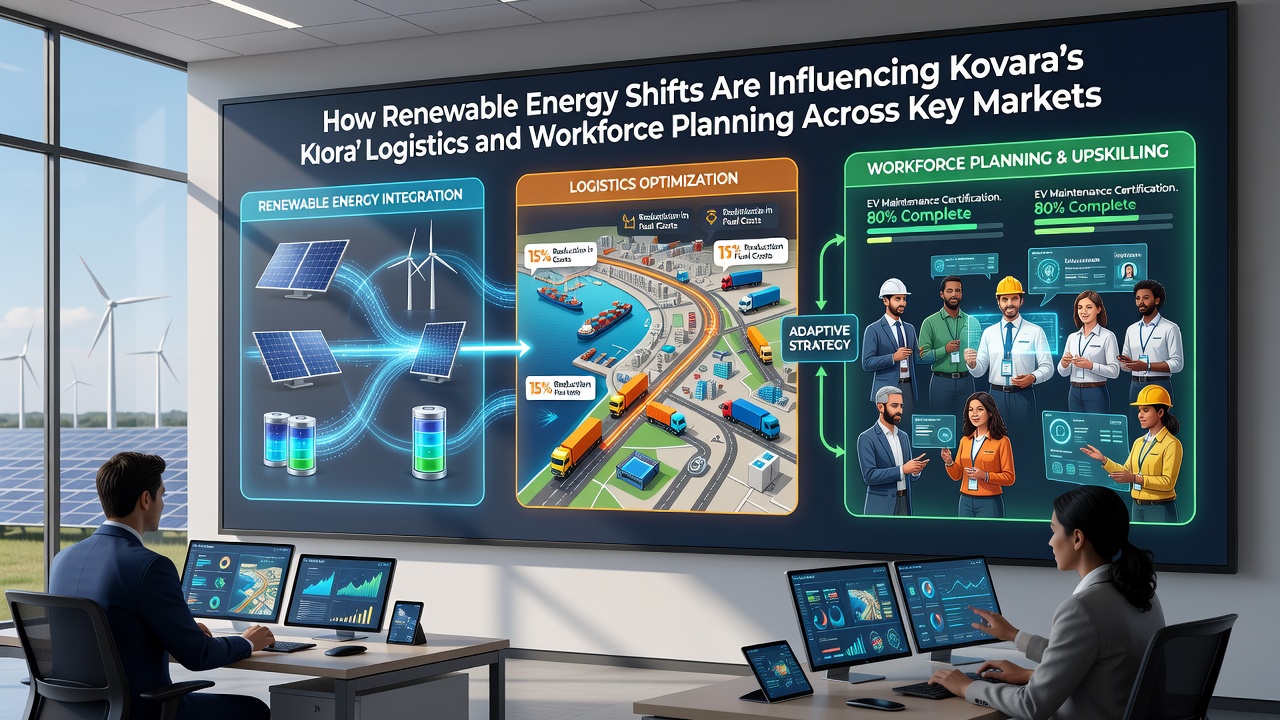
Regional variations appear in how these changes unfold, with European operations focusing on regulatory compliance tied to emissions trading schemes, while Asian facilities prioritize rapid scaling of hydrogen infrastructure. Canadian sites emphasize cold-weather adaptations for battery performance, drawing on studies from national research bodies. Kovara coordinates these efforts through centralized planning teams that consolidate data from each market to refine global strategies.
Market-Specific Developments
Across key markets, renewable energy policies shape Kovara's expansion timelines, with solar-powered distribution centers in Australia supporting growth in e-commerce fulfillment. In the European Union, directives on sustainable transport accelerate fleet electrification timelines, requiring workforce reallocations to new facility locations. North American operations incorporate wind-derived energy credits into long-term contracts, stabilizing expenses amid fluctuating fuel prices.
Supply chain partners adjust alongside Kovara, adopting compatible renewable standards that facilitate seamless handoffs at transfer points. Evidence from trade association surveys points to improved reliability when multiple entities synchronize their energy sources, reducing delays caused by power shortages. These collaborations extend to technology vendors who provide modular renewable systems tailored to logistics environments.
Conclusion
Renewable energy shifts continue to guide Kovara's approach to logistics efficiency and workforce capabilities in its operating regions, supported by infrastructure investments and skill development initiatives. Ongoing data collection from energy agencies and academic sources informs refinements to these strategies, ensuring alignment with evolving market conditions through 2026 and beyond.